Dirección
304 North Cardinal
Dorchester Center, MA 02124
Horas de trabajo
De lunes a viernes: de 7.00 a 19.00 horas
Fin de semana: 10.00 A 17.00 HORAS
Dirección
304 North Cardinal
Dorchester Center, MA 02124
Horas de trabajo
De lunes a viernes: de 7.00 a 19.00 horas
Fin de semana: 10.00 A 17.00 HORAS

Playground design begins with a knowledge of the various types of playground equipment and how they add to play. From physical challenges to sensory and social experiences, each type of equipment has its own value. Understanding these differences enables you to create a more balanced playground that better serves your users, space, and project goals.
Playground equipment can be classified according to the type of play experience it provides. Some of the equipment is for climbing and physical activity and others for movement, balance, social interaction or sensory play.
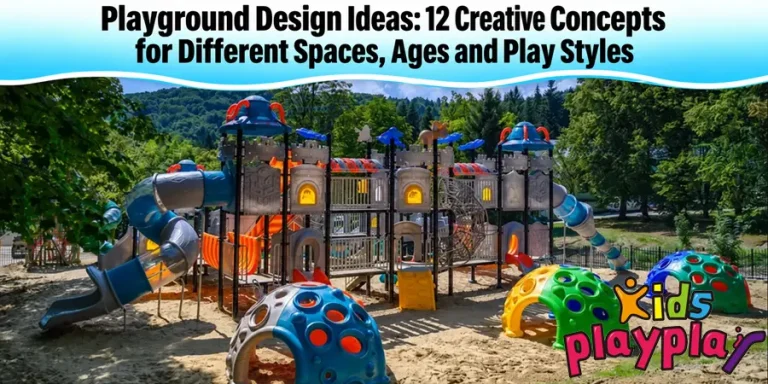
A play system or playground structure is a connected installation that combines a number of activities. It can involve platforms, towers, bridges, slides, tunnels, climbers and activity panels.
In many commercial playgrounds, the main play structure is the heart of the whole design. It allows you to provide for multiple activities in a single organized space and can be especially useful when you need to make the most of limited space.
Bigger systems can handle more users and a range of challenge levels, whereas smaller systems work well in preschools, hotels and smaller community projects.

Slides are one of the most well-known types of playground equipment and can be purchased as a single unit or as part of a larger play structure.
Typical designs are straight, wave, spiral and tube slides. The right choice depends on the target age group, platform height, available space and overall playground design.
A slide can seem simple, but it usually works best when paired with another activity. For example, instead of a play route that is one activity isolated from others (the slide), children may have to climb through a structure to get to the slide, which comprises a more complete play route.


There is a kind of motion in swings that you can’t get out of climbing and sliding equipment. Depending on your users you can select belt swings, toddler seats, group swings or inclusive swing seats.
Swings are commonly located in schools, parks and community play areas because they provide variety and are familiar to a wide range of users.
But they do require a lot of room around the moving part. When planning the layout, the swing zone should be considered from the beginning, not added anywhere there is space to add it.


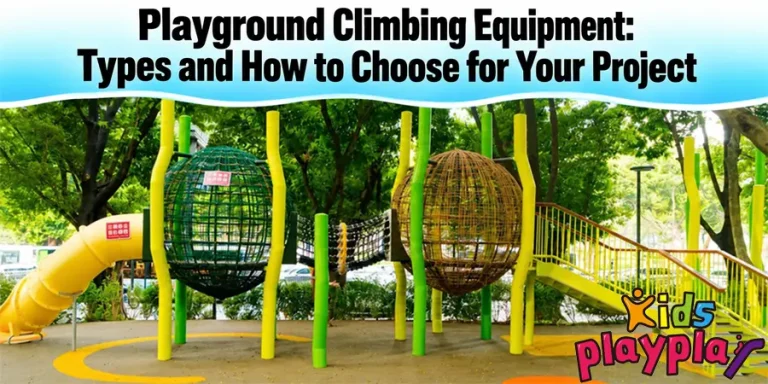
The climbing equipment helps children to grip, pull, balance and move between different heights. This category includes monkey bars, climbing walls, overhead ladders and climbing towers.
Rope playground equipment offers a similar physical challenge, but a different experience, as the ropes and nets can move a little as kids climb on them. Typical examples include rope bridges, cargo nets, climbing nets and rope towers.
If you prefer a more active playground, climbers and rope play are often key features. The difficulty level should still be appropriate for the target age group. “It’s not just about to make the equipment higher to make it more challenging; The route, grip style, spacing and transitions all matter.


Spinners, seesaws and spring riders all add movement, but each offers a different play experience.
Playground spinners can be made for one child or several users at once. Group spinners are particularly good if you want to encourage social interaction.
Seesaws go up and down together, while spring riders are generally smaller and work especially well for younger children. These products are also suitable for filling in smaller zones where a full play structure would be impractical.


Balance beams, stepping pods and low obstacles are easy ways to introduce coordination and physical challenge without adding another large structure.
Tunnels add crawling and exploration and make-believe. They are either installed at ground level, or used to connect different sections of a play system.
Both are useful when you want to add variety without making the playground feel overcrowded.

Not all playground activities have to involve climbing or fast movement.
Sensory playground equipment can include musical panels, tactile activities, gears, movable parts and other interactive features. These activities can offer children a quieter way to play and provide more variety for users with different interests and abilities.
Sensory activities work well in preschool, school and inclusive playgrounds but can be added into larger commercial play systems as well.


An inclusive playground should offer meaningful play experiences for people who have diverse mobility, sensory, and developmental needs.
This could include accessible routes, ground level activities, supportive swings, sensory panels, ramps, transfer points and group play equipment depending on the project.
Having one accessible product doesn’t make the whole playground inclusive.Consider how users access the equipment, flow through the space and engage with each other.

Playground equipment can also be divided into playground components and free standing equipment. The main play structures are typically composed of playground equipment such as slides, bridges, climbers, tunnels and activity panels. Independent freestanding equipment such as swings, spinners, spring riders, seesaws and standalone climbers.
Knowing these two types can help you to design a more balanced layout, with a central play structure and separate activity areas across the playground.
Various types of playground equipment are used in different age groups. Most children are young enough to require lower, simpler activities, but they grow up to be able to handle more complex climbing, balancing and moving challenges. Knowing these differences can help you match types of equipment with the users of your playground.
Common playground equipment for young children includes low slides, simple climbers, spring riders, sensory panels, age appropriate swings and ground level activities. They are intended to be simple to play and do not involve complicated movement or a high level of physical challenge.
Many preschool playgrounds have small play structures, slides, simple climbers, spring riders, swings, tunnels, and sensory equipment. These types of equipment can provide a combination of movement, exploration, imaginative play and social interaction in an age-appropriate setting.”
Older kids usually prefer the more challenging playground equipment. Types include multi-level play structures, rope climbing equipment, monkey bars, overhead activities, larger climbers, slides, spinners and balance equipment. These activities give children more chances for strength, coordination and active play.
If your playground is designed for multiple age groups, you may want to mix and match equipment types or designate high and low challenge activity areas. This allows younger and older users to engage in age-appropriate activities in one unified playground.

Every project is unique and as such requires different are types of playground equipment as their needs of users, space and activities differ. A preschool may have simple and accessible play, but a school or public park usually needs more variety and capacity.
Preschool and daycare playgrounds often have compact play structures, low slides, spring riders, tunnels, sensory panels and simple climbers. The equipment types allow for movement, exploration and sensory play at a level understandable to younger children.
Schools playgrounds usually contain a variety of play structures, such as multi-activity units, climbers, rope play equipment, slides, swings, balance equipment and group activities. These types present more physical challenge and permit for larger numbers of children during play times.
Community playgrounds and parks usually require a greater variety of equipment to serve a range of ages and abilities. Common types include large play structures, swings, rope climbers, group spinners, sensory equipment and inclusive play equipment.
Themed play structures, slides, climbing equipment, interactive activities and sensory play can be found in commercial playgrounds located in hotels, resorts, shopping centers and other venues. The mix of equipment is often dictated by the available space, the target users, the capacity, and the overall style of the project.

A good playground is not about how many pieces of equipment you put in. It is defined by how many different and useful play experiences you create.
Active physical play is largely supported by climbers, rope equipment and monkey bars for example. Swings, slides and spinners provide movement. The balance equipment develops co-ordination, sensory panels and imaginative activities create quieter forms of play.
That means adding another slide is not always the best use of the space you have left. If there are already several sliding and climbing activities, but no swinging, spinning or sensory play, another type of equipment may add more value.
You might combine: Compact play structure + small slide + spring riders + sensory panels + simple climber
You might combine: Multi-level play system + climbers + rope play + slides + swings + balance equipment
You might combine: High-capacity play structure + swings + group spinner + rope climbing + inclusive activities + sensory play
These are planning examples rather than fixed designs. Your final combination should be based on your actual site and project requirements.
Knowing the main types of playground equipment is the first step. Once you have that knowledge, compare them, not just by looks, but by how well they fit your actual project.
Different age groups need different challenges. Younger children will generally require lower and simpler activities, whereas older children can use more complex climbing, balancing and movement equipment.
Different types of equipment require a different space. Larger structures, swings and rope systems generally require more space. Spring riders, sensory panels and smaller climbers can be installed in smaller areas.
Try to vary different play experiences and not just repeat the same thing. A balanced playground can offer climbing, sliding, swinging, spinning, balancing and sensory play.
The type of equipment suitable for outdoor conditions, frequency of use, safety zones and surfacing can all make a difference. Be sure to check the requirements of your project location.
Choosing Mostly by Appearance
An attractive structure still needs to provide useful activities for your target users.
Playing the Same Type of Play Over and Over Again
It may be that several similar climbers are of less value than combining climbing with swinging, spinning or sensory activities.
Disregarding Age Gaps
What is suitable for younger children may not be challenging enough for older users.
Overcrowding the Space with Equipments
More equipment doesn’t necessarily equal a better playground. Overcrowding can affect circulation, visibility and useability.
Leaving Surfacing Until the End
The equipment layout and safety surfacing should be planned together from the very beginning.
Knowing the types of playground equipment can help you understand what each product can bring, but the success of a commercial playground is in the elements working together. The final equipment mix should be determined based on your site size, target age groups, expected capacity and installation environment. Rather than just offering individual products, an experienced playground equipment manufacturer can provide you with a working layout of individual pieces of equipment, structures, slides, swings, climbers and other activities that will suit your project.

What Is the Difference Between Commercial and Residential Playground Equipment?
Commercial playground equipment is made for more demanding usage, bigger capacities and shared areas like schools, parks and commercial venues.
Can I use my playground equipment outdoors and indoors?
Yes. Equipment must be suited to the environment, particularly regarding space, materials, weather-resistance and maintenance requirements.
How Durable are Commercial Playground Equipments?
The service life is determined by the materials used, the application, the environment and the maintenance. With proper care and regular inspection it can be extended.
How Frequently Should Playground Equipment Be Inspected?
Frequency of inspection depends on use and local requirements. High-traffic playgrounds tend to require more frequent inspections.
Can a Playground Project Be Phased?
Yes. Plan the final layout so that future equipment can be added without affecting circulation or safety zones.
Understanding the different types of playground equipment will help you to customize your choices to suit your space, your users, and your project goals. Don’t think of them as products to buy one at a time, but as a group of play experiences that complement each other. Even before you can put together a whole playground, with a little forethought you can create a safer, more attractive and more functional play area with a single item.

Scan to add WeChat