Dirección
304 North Cardinal
Dorchester Center, MA 02124
Horas de trabajo
De lunes a viernes: de 7.00 a 19.00 horas
Fin de semana: 10.00 A 17.00 HORAS
Dirección
304 North Cardinal
Dorchester Center, MA 02124
Horas de trabajo
De lunes a viernes: de 7.00 a 19.00 horas
Fin de semana: 10.00 A 17.00 HORAS
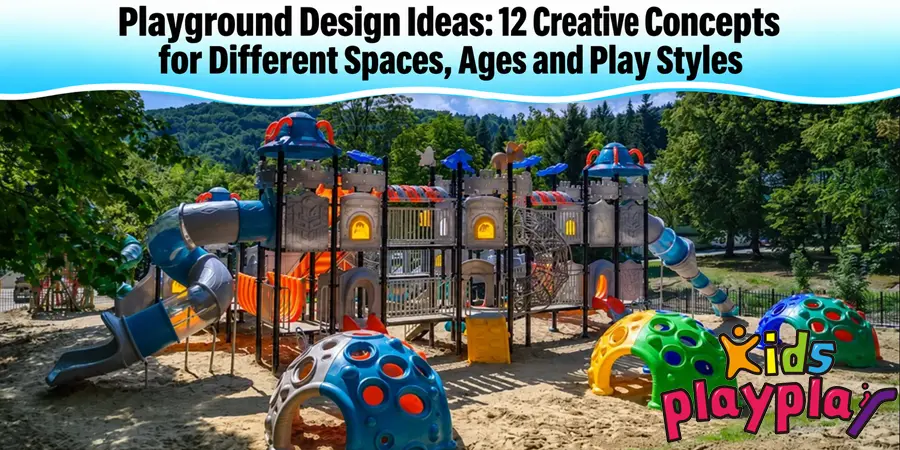
A great playground design concept doesn’t end with choosing equipment. It has to fit your site, your space, and the play experiences you intend. The right playground design ideas help to structure movement, group activities and define the overall esthetic. These ideas can help guide the direction of your site, whether it is a school, park, daycare or commercial project.
Explore 12 Playground Design Ideas: Nature, Adventure, Climbing, Themed, Sensory, Inclusive, Toddler, Compact and More Playground Concepts
Match Ideas to Your Project: Select ideas for schools, parks, daycares, commercial playgrounds, communities or resorts.
Accommodate Different Play Styles: Active play, Sensory play, Imaginative play, Social play, Challenge play.
Consider Age & Ability: Design for diverse users through toddler, multi-age, and inclusive design.
Mix & Match Ideas For Your Space: Mix themes, climbing, sensory play, multi-level structures to suit your site.
A playground may look impressive in a rendering but still be difficult to use if the design does not match the people or site.
Before choosing a concept, think about five basic factors:
| Factor | What You Should Consider |
| Users | Age groups, abilities, expected number of users |
| Space | Area, shape, access points, terrain, and indoor or outdoor conditions |
| Play Variety | Active, sensory, imaginative, social, and challenging play |
| Accessibility | How different users can reach, use, and enjoy the play space |
| Project Purpose | School, park, daycare, commercial venue, resort, or community space |
You do not need every type of equipment in one playground. A stronger design usually gives each feature a clear purpose and creates enough variety for children to choose different ways to play.
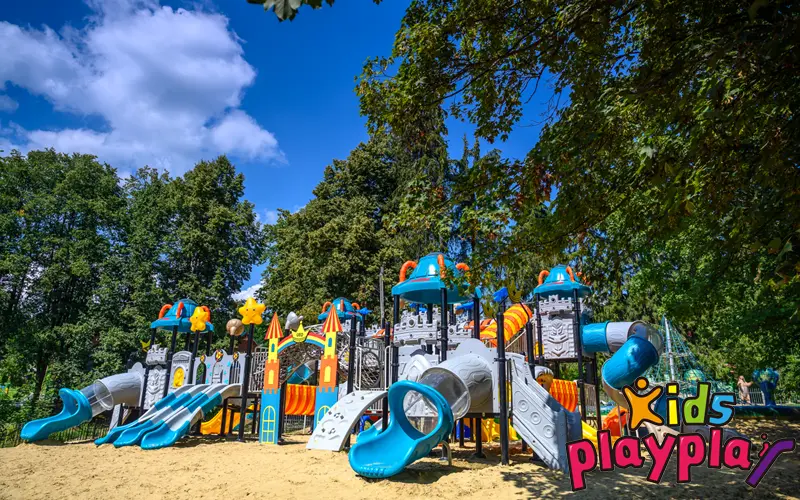
Natural colors, timber-look structures, rope elements, rocks, planting and organic shapes can all help your playground feel more connected to its surroundings.
The goal is not just to make the playground look natural. Use these elements to encourage exploration, climbing, balancing and sensory play.
For instance, climbing routes can be constructed on rock-like features, rope elements can connect different structures, and landscaping can be used to define play areas.
This concept works particularly well in parks, schools, resorts and community projects where the surrounding outdoor environment of the site is inherently an important element of the site.
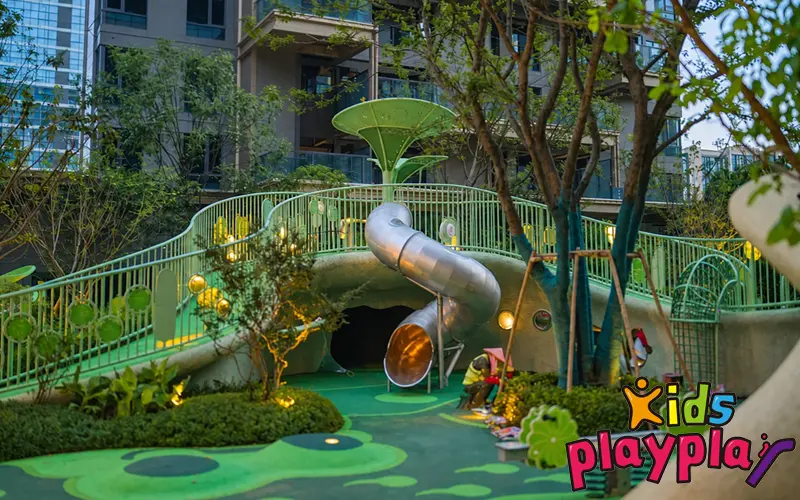
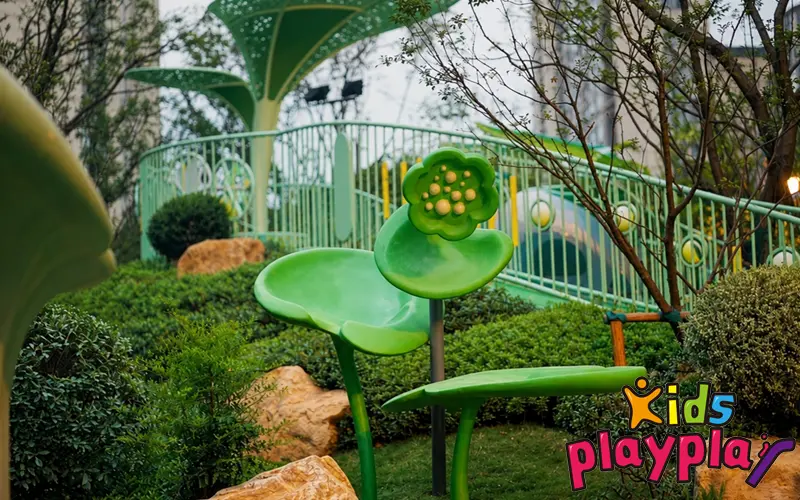
Rather than scattering several unrelated structures around the playground, use one main adventure tower as the center of the design.
From this central structure you can attach bridges, rope courses, climbing features, tunnels, slides and other activities.
The tower serves as a visual landmark as well as a launch point for different play routes.
This can be especially effective for commercial playgrounds, public parks and projects where one strong feature is needed to attract attention.
When designing the tower, include more than one way to move through it so that children are not forced to take the same route each time.
Do not list several similar-in-difficulty climbing activities. Organize them so that children can progress from easier to more difficult challenges.
Start with low climbing walls or balance elements and then add rope bridges, climbing nets, overhead activities or higher structures.
This design for a climbing playground is well suited for schools, parks, and projects geared toward older children.
This gives a sense of progression and more opportunities for children of differing abilities to get involved.
A climbing playground like this can work particularly well for schools, parks and projects with older children.
You can also place easier and harder routes next to each other so children can choose their own level without being separated from the main play area.
Design up if you want more activities and don’t want to take up too much ground space.
Multi-level playground structures can include towers, bridges, elevated tunnels, climbing routes, activity platforms, and different slides in a relatively small footprint.
This adds vertical room to the play experience.
You can also use the spaces below the raised platforms for panels, role play activities, tunnels or for quieter play.
This is great for commercial playgrounds and other projects where you want a higher density of play.
However, don’t add levels simply for the sake of height. Every level should give children a reason to move, explore or take a different route.

*The multi-level play equipment from kidsplayplay
A themed playground should be more than just matching colors and decoration panels.
You can turn the theme into a series of play experiences.
For example, an ocean-themed playground might start with a ship structure, then a rope bridge to a lookout tower, ending with a slide as an escape route.
You could go for a jungle theme with climbing nets, towers that look like trees, rope crossings and hidden activity areas.
Choose a theme→castle, space, pirate, city, animal or nature→and relate the visual idea to the things children really do.
This helps themed playground ideas feel more immersive and gives the design a clearer purpose.

One playground doesn’t have to offer the same experience everyplace.
You can separate the site into different play zones based on activity and energy levels.
For example :
The zones don’t require walls or strong physical separation. They can be defined by changes in surfacing, equipment, planting or layout.
This approach is especially valuable when your playground must cater to diverse interests without making the entire design seem a little off.
You can spread sensory activities around the playground, rather than having them all in one corner, as a discovery route.
A child could transition from a textured panel to a musical activity, then to movement-based equipment, colorful interactive features or natural materials.
This incorporates sensory play as part of the journey through the playground.
Combine touch, sound, movement, color and simple cause and effect activities.
A sensory route fits well in schools, daycares, public parks and inclusive playground projects as children can interact with it in different ways and at different speeds.

If your project needs to cater for children with different abilities, don’t treat inclusive play as a totally separate section of the playground.
Instead, seek out ways to allow more users to share the same play experiences.
You can offer accessible routes to key spaces, at-grade activities next to elevated structures, sensory elements that can be shared by different users, and activities that vary in terms of physical challenge.
You should also consider circulation, seating, quieter areas, and caregiver flow.
Designing an inclusive playground is more than just access. It is to increase the opportunities for kids to work together.
Separate equipment can be useful when you need to serve toddlers, young children and older children—but the playground should not feel like several unrelated spaces.
You can connect age-appropriate zones with shared social areas, open spaces, appropriate swings, sensory activities or transition zones.
For example, a toddler area could be turned into a shared central space with more challenging climbing and adventure equipment further out for the older users.
This allows you to have different challenge levels, but keep the playground visually and socially connected.
This can make a multi-age playground easier to use together for families and groups, for schools, parks, communities and commercial projects.
If your site is limited, focus on the amount of useful play each area provides, not how many pieces of equipment you can squeeze in.
Small playgrounds can use multifunctional structures that combine climbing, sliding, tunnels, activity panels, and imaginative play.
You can also make better use of vertical space by putting suitable activities below platforms.
Don’t take up valuable space with multiple pieces of equipment that will give you nearly the same experience.
You still need good circulation between activities.
When thinking about ideas for playgrounds for small spaces, the goal should be to create more variety from fewer, better-connected features – not to fill every available space.
When children can keep moving instead of reaching dead ends again and again, a playground becomes more engaging.
A loop can be formed by combining climbing and balancing or bridges and slides or stepping elements or open movement spaces into a path.
For example:
Climb → Cross → Balance → Slide → Back to start area.
Children can walk the whole loop, or hop on and off at various points.
This kind of layout can improve the movement through the space, and can make a relatively simple mix of equipment feel more dynamic.
When designing a loop, try to avoid bottlenecks where one popular activity blocks the route for everyone else.


You don’t have to focus on physical activity for every part of a playground.”
You can intentionally create spaces for children to meet, talk, cooperate, observe others, or simply take a break.
Group swings, shared activity panels, open play areas, role-play areas, seating, gathering points and equipment for multiple users can all facilitate social play.
These areas are especially valuable in the design of school, community and public playgrounds.
Don’t leave the seating and open space as spaces between the equipment; incorporate them into the layout from the beginning.
This provides children with more ways to use the playground and can help link different activity zones.


You don’t have to implement all 12 ideas. Start with your real project needs and select the concepts that best solve them.
First, define your playground users.
Consider:
It helps you decide on the right equipment heights, the type of activities, and the level of difficulty.
Before you develop the concept, look at the real site.
Consider the available space, the shape of the space, the entrances, circulation routes, the terrain, surrounding buildings and areas that must be kept clear.
A small site can benefit from vertical and multifunctional play while a larger site provides you more freedom to create separate activity areas.
Think about what you want children to be able to do rather than immediately choosing individual pieces of equipment.
You might want to combine:
You don’t need the same amount of each type in your project.
Consider how children and adults walk through the space.
Keep important areas in view where supervision is required Remove needless barriers between activities Make available other ways for users to participate
Ground-level activities and circulation that is accessible can be incorporated into the overall design rather than added later.
A playground concept still needs to work with your budget, available space, surfacing, installation conditions, and future maintenance.If a concept becomes too complicated you can often simplify individual elements while retaining the main design idea.
Concentrate your investment on the activities and features that matter most to the users you want to serve.
You can combine several ideas depending on your project.
| Project Type | Main Design Priorities | Ideas to Consider |
| School | Different ages, physical activity, social play | Climbing progression, play zones, loop layout |
| Preschool / Daycare | Younger users, visibility, sensory and imaginative play | Sensory route, connected age zones, themed play |
| Public Park | Broad user range, variety, accessibility | Nature, inclusive play, social spaces |
| Commercial Playground | Attraction, play capacity, repeat visits | Adventure tower, multi-level play, themed storytelling |
| Hotel / Resort | Appearance, family experience, site integration | Nature, themed play, social spaces |
| Community Space | Multi-age use, interaction, varied activities | Connected zones, inclusive play, loop layout |
You don’t have to construct your entire playground around a single theme.
For instance, you might pair a nature-themed visual style with progressive climbing, sensory exploration, inclusive ground-level play and a loop design.
Best-practice playground design elements often combine rather than stand alone.

Once you know which playground design ideas fit your project, the next step is turning them into a practical, site-specific design.
Start with the users and the space and move from big-picture to the finished playground and equipment plan.
The practical methods and processes are as follows:
Define the target users and age groups.
Decide who will be using the playground, what age range they will be and whether you need to cater for different ability levels.
Verify your site measurements and entry points.
Look at the available space, the shape of the site, the entrances, the surrounding spaces and fixed obstacles.
Choose your main design concept.
Decide whether your project will focus on nature, adventure, climbing, themed play, sensory activities, multi-age play, or a combination of several ideas.
Decide which play experiences you want to provide.
Mix active, imaginative, sensory, social and challenge-based play based on your users.
Choose the proper gear and set up the playing areas.
Organize the climbing structures, slides, interactive components, social zones, and other gear so that each zone is dedicated to one activity.
Check the entire playground design.
Before the layout can be finalized, consideration must be given to traffic flow, surfacing, accessibility, installation and local project requirements if applicable.
When working with a custom playground manufacturer, provide your floor plan or site dimensions early on. Also share your desired age groups, anticipated number of users, preferred design style and key activities.
This means your custom playground design can grow around the actual site rather than try to fit a standard structure in the space later. It also helps translate your initial playground ideas into a more workable mix of play zones, equipment and user experiences.
What is the best playground layout?
No single layout will work for every playground.
The best layout for you will depend on your site, target age groups, equipment, expected number of users and types of play.
In most projects you want to keep circulation clear, connect related activities, separate areas with very different challenge levels where needed, and maintain useful sightlines.
A loop configuration or linked play areas usually offers a more natural flow through the playground.
How to Make a Playground for Different Age Groups?
Provide levels of activity and challenge suitable to each age group.
Younger children can use lower platforms, simple climbing, sensory play and role-play. Older children may prefer taller climbing structures, ropes, obstacles and more demanding challenges.
Try not to separate each group completely but link the zones with common social spaces or suitable shared activities.
What are some good playground ideas for a small space?
Use multi-functional equipment, vertical play, connected activities, and equipment that provides multiple play experiences in one footprint.
One compact structure, for example, could have climbing, slides, tunnels, panels and imaginative play.
Don’t put multiple devices that serve the same purpose. Usually you get more value from fewer activities that are well connected.
Is it possible to combine different playground design ideas?
Yes. Combining ideas gets you a stronger result in a lot of projects.
You could have a themed visual concept with a central adventure tower, progressive climbing, sensory elements and a separate toddler zone.
The secret is to pick a single clear overall direction and ensure the different ideas are all aligned to the same users and project goals rather than working against each other.
The best playground design ideas are not simply different styles of playground equipment. They are ways to make better use of your space, create more varied play experiences, and design around the people who will actually use the site.
You can combine several ideas to create a playground that fits your project rather than copying a standard design.

Scan to add WeChat