Dirección
304 North Cardinal
Dorchester Center, MA 02124
Horas de trabajo
De lunes a viernes: de 7.00 a 19.00 horas
Fin de semana: 10.00 A 17.00 HORAS
Dirección
304 North Cardinal
Dorchester Center, MA 02124
Horas de trabajo
De lunes a viernes: de 7.00 a 19.00 horas
Fin de semana: 10.00 A 17.00 HORAS
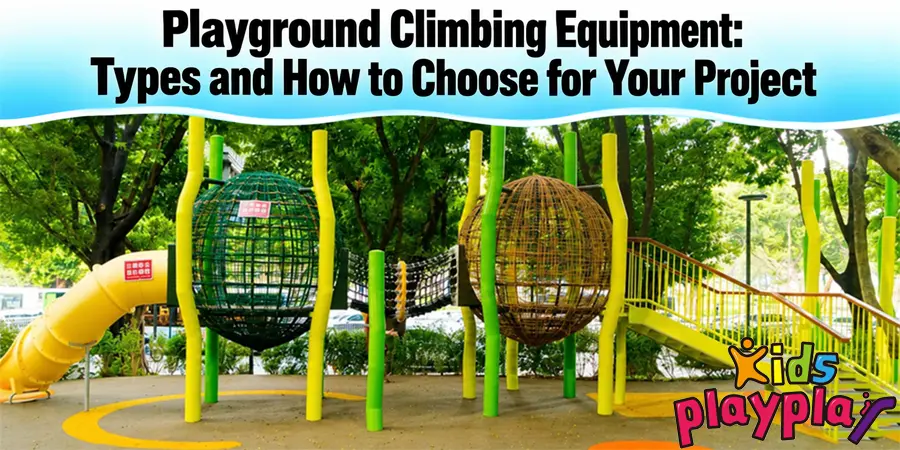
Playground climbing equipment offers children different ways to get up, across and through a play space. This guide examines the major types of climbers and the choices that matter when you select them. It can help you to narrow your choices, review a proposed layout and give a playground equipment manufacturer the information he needs to assemble a suitable design.
When choosing playground climbing equipment, begin by considering what it is for and the children who will be using it. Then see how it will fit your site and compare the full scope of each proposal.
Find out what its for. Will the climber lead to a play structure, be a standalone attraction, or connect multiple activities?
Match the challenge to your users. Think about their ages and abilities when considering height, handholds, climbing routes and ways down.
Lay out the whole activity area. Observe the footprint of the equipment in relation to the surrounding space, surfacing, circulation and supervision points.
Compare full proposals. Compare the price, but check out the design, materials, documents, scope of installation and maintenance requirements.
Give out your site info early. A floor plan and target age range help us recommend equipment that fits your project better than a reference photo alone.
Playground climbing equipment consists of structures that children climb up, down, or across with their hands and feet. A climber might be a small feature leading up to a platform or a large structure with many possible routes.
You will find two common setups:
Connected climbers form part of a larger play structure. A ladder, wall or net could go from the ground to a deck, could connect two levels or be another way to get to a slide.
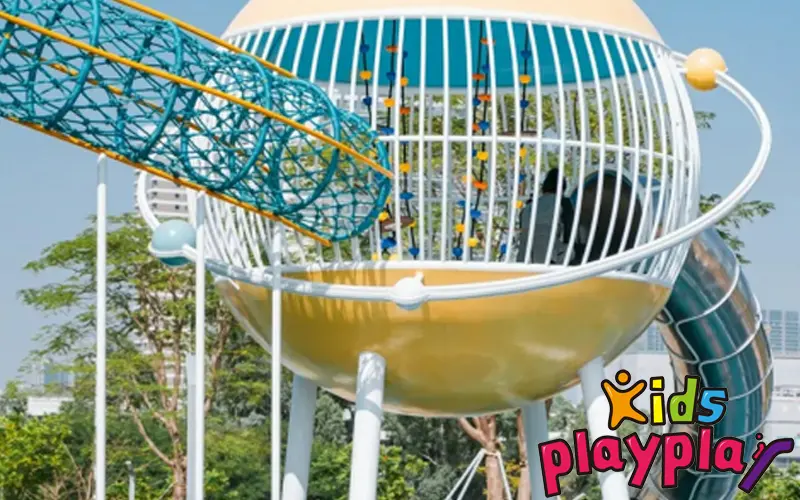
Freestanding climbers create their own activity zone. Examples include climbing frames, rope towers, domes and boulder-style structures.
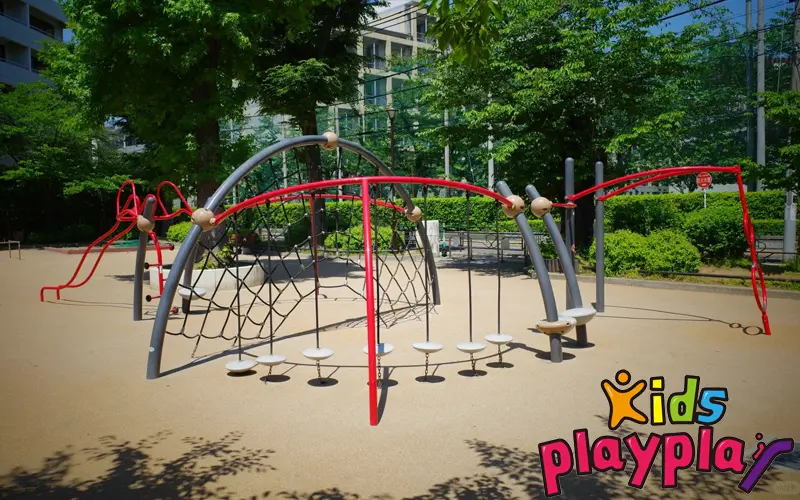
This difference is important when you are designing an existing playground. A free standing unit needs a proper location and its own surrounding area. A connected component must also be of the same dimensions and construction as the structure it joins.
Climbing can help build strength, coordination, balance and problem solving skills. Those benefits are helpful for your project if the equipment offers a suitable challenge and gives children a reason to come back.
Product names will vary between suppliers. You should compare what children actually do on each structure and how it will function on your site.
| Type | What children do | A practical use |
| Climbing frames and jungle gyms | Explore several routes through one structure | A main activity area for a school or park |
| Rope nets and rope towers | Climb, cross, and balance on flexible elements | An adventure-focused playground |
| Climbing walls and boulders | Follow handholds across or up a defined surface | A focused challenge or themed feature |
| Ladders, arches, and panel climbers | Move from the ground to a platform or between levels | Access within a larger play structure |
| Overhead climbers and monkey bars | Travel from grip to grip above the ground | A more demanding traverse activity |
| Soft climbing elements | Climb and crawl through padded indoor features | An indoor play area for its intended age group |
Climbing frames combine a number of routes into one structure. Kids can climb up a ladder, cross over a bridge, go across a net and reach a slide or platform. That’s why they are useful if you want to make climbing a main activity at a school or park.
Compare designs by the number of different routes children can take. Verify that they can enter and leave from different points, particularly if many children might use the structure at one time.
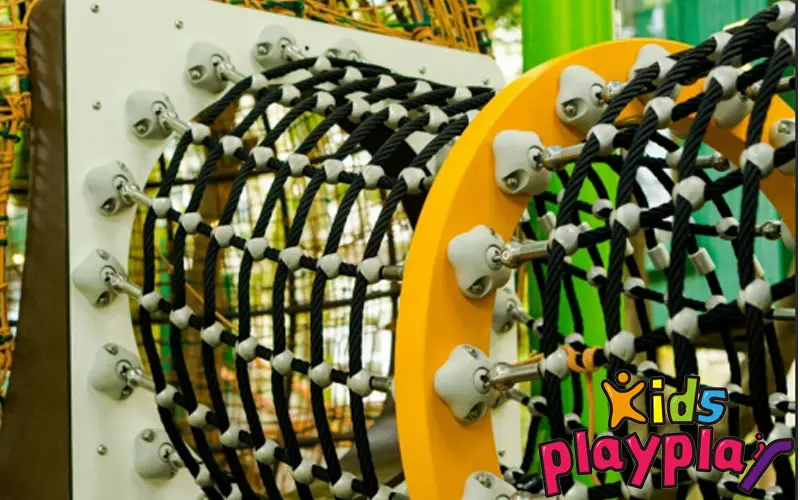
Rope nets allow children to climb, cross and balance in various directions. Adventure-oriented play spaces can also feature rope towers as a highlight.
Select the configuration based on your users and available space. Notice the height, net layout, entry points and ways down. Ask about post-installation inspection and maintenance of the ropes, connections and high wear areas.
Climbing walls provide a defined surface and handholds for children to plan a route. A freestanding boulder can create a separate activity, a wall can produce a platform. Both can be nature- or adventure-themed.
Think about the angle of the wall, the placement of holds and the difficulty of the route. Also check how the children will move in the feature and if the surrounding space fits the proposed design.
These climbers often help children move from the ground up to a platform or from one level of a larger play structure to another. They can offer an easier course alongside a harder net or wall.
Their look is as crucial as their placement. See if children can get to the first step or grip, where the route goes, and if multiple children will arrive at the same platform at the same time. The means to get down should be part of the overall design.
Overhead climbers test kids’ ability to climb from grip to grip above the ground. They present a different challenge than climbing up a frame or wall and they add variety for children who are ready for more challenging movement.
Choose equipment appropriate to the age and skills of your target users. Check grip placement, route length, entry and exit points, and the space and surfacing beneath it. Think about whether children who can’t manage the whole crossing have a way out of the activity.
Soft climbing elements are padded shapes, slopes, steps or obstacles which create climbing and crawling routes inside a play area. They may be within a larger indoor structure or a separate space for the age group targeted.
Choose features that are suitable for the children using the space and the activities around them. Before approving the layout, check that all surfaces are visible, are circulated and are accessible to staff for cleaning and inspection.
Start with the children who will use the equipment, thinking about their age range, likely abilities and how they will use the site throughout the day.
For younger users, stick to routes that are easy to approach, have grips you can reach and spots where you can stop or turn around. A low structure can still provide variety with steps, angled surfaces, short nets, and different ways to move between levels.
For older children, you may want longer routes, more choices and a greater physical challenge. The difficulty can be from the shape of the route, change of direction, grip placement and movement from different elements. You don’t have to make everything taller.
For a mixed-age playground, determine if separate climbing areas or a variety of routes within a larger design will be more effective for a mixed-age playground. A single difficult route will exclude some children. A single easy route may create a bottleneck while offering little reason for others to return.
What happens when the child gets to the top? The way up may be easier for children than the way down. Platforms, alternative exits, and clearer route choices allow the equipment to function as a complete play experience.
The same Playground Climbing Equipment can serve different purposes depending on the site. These examples show where to begin your comparison.
A school break may see many children arrive at once. You need to consider how they enter, cross and leave the climbing area. Several routes can spread activity more effectively than a structure that sends everyone through one ladder.
Match the equipment to the pupils using it and the space available during recess. Check whether staff can see key points on and around the climber. If you are updating an existing playground, a separate climbing feature may add a new activity without requiring a complete redesign.

A community playground is often for children of different ages and abilities. A prominent rope structure or climbing frame can give the site a recognisable feature, while smaller nearby activities provide other ways to participate.
Take into account the whole context: access to the playground, seating, adjacent play areas and the anticipated flow of use. A visually impressive tower is only a good choice if its activity area, access routes, and maintenance needs fit the park.

Indoor climbing equipment often works as part of a sequence with soft play, tunnels, platforms and slides. Your building limits what you can do. Check the ceiling height, columns, exits and circulation before you go ahead with a tall or wide structure.
Visibility and access in confined spaces. Staff must inspect and clean the equipment, and caregivers must know where children can go. A compact design with clear routes may work better than one that fills every available corner.

If indoor climbing is part of a hotel, shopping mall or pay-to-play destination, think about the experience you want visitors to remember. A themed structure might help, but it should still allow for easy movement, age-appropriate activity and practical maintenance.
Think about the climbing in relation to the rest of the venue. Children should have lots of things to do without it all leading to the same platform or slide.

Dimensions of a product show the size of the equipment. Not everything your project requires. Review the site plan, including the climber, the activity area around it, surfacing, and equipment nearby before approving a design.
Trace the paths that children might take around the playground. How do they get into the climber, change direction and come down? Be sure you check if a number of routes converge onto a narrow platform or exit where children might have to wait.
Have a look at the activities around the climber as well. An exit should not lead directly onto a busy route with a swing, slide or running area alongside. Ensure caregivers and staff can see key climbing points, particularly those behind walls, platforms or themed panels.
Use the scaled plan for an irregular site. The location of the equipment can be influenced by columns, trees, slopes, entrances and building services.
Think of the climber and the protective surfacing as a single design. Confirm the intended age group, fall height, required surrounding area, openings, grips, connections and ways to get on and off the equipment.
Ask your supplier which standards apply to the proposed configuration and what documentation exists for your market destination. Final design should be checked against local requirements prior to installation.
Think about how children with different abilities might be able to take part in the area. Ground-level activities, diverse routes and access to nearby play features can enable more children to share the space even if they do not use an elevated climbing route.

Ask what materials were used in the actual design. Its frame, ropes or nets, panels, grips, connectors and finishes.
Outdoor playground? Consider weather conditions and expected daily use. For an indoor playground, pay particular attention to high-touch surfaces and enclosed spaces that staff will need to clean. A list of materials is helpful, but the connections and overall construction will also determine how the equipment will perform.
Make sure staff can access the ropes, holds, connections, panels and the area under the structure for inspection and cleaning. Find out from the supplier which parts need routine checks, how repairs would be handled and if replacement parts are available.
These details are easier to review in the design than once the climber has been installed.
The cost of playground climbing equipment depends on the size of the structure, the materials used, the number of climbing routes, and the degree of customization. Your overall project budget will also be affected by protective surfacing, shipping and installation. Compare the prices properly, see what each quotation entails.
Compare the Full Scope of Each Quote
Ask supplier for a breakdown of included equipment and components, overall dimensions, materials and proposed installation area. Check if surfacing, site preparation, shipping and installation are included or charged separately. See what drawings, instructions, warranty terms and replacement parts are available.
Look at price with scope and play value. A higher quote may include additional usable routes or services not included in another proposal. If a quotation is lower, identify what you would have to arrange separately.
Share Your Project Details to Get a More Accurate Quote
There is no need to choose a specific model before requesting a proposal. Send us your site plan or dimensions, target ages, expected number of users, project location and budget range. Whether the climber should be a main attraction, an additional activity, or part of a larger play structure.
Reference images can show you the experience you want. Examples of Rope Playground Equipment may help you describe a freestanding adventure feature. Outdoor playground equipment and juegos infantiles de interior show various ways to combine climbing with other activities. Your site conditions will dictate the final configuration.
If you are adding a climber to an existing playground, include photos, available model information and accurate measurements so the supplier can review the available options.

Yes, if the site and design permit. A freestanding climber can add a new activity without changing the existing structure. If a component is added to existing equipment, dimensions, connections and compatibility need to be examined more closely. Send the supplier photos and available drawings prior to model selection.
It is contingent upon the experience you want to get. A rope net gives a flexible movement in many directions. A climbing wall gives a more defined surface and route. Compare available space, level of challenge, inspection needs and relationship to the rest of your playground with target users.
Provide sufficient route choice for the activity level and users you expect. A small site may only require a few distinctly different climbing lines. A busy school or park may benefit from more entry points and varying levels of difficulty. It is useful to measure how children can move through the structure without all using the same pathway.
Select equipment for the environment in which it will be installed. The outdoor conditions influence the choice of material and the finish. Indoor projects sharpen the focus on building constraints, cleaning access and circulation. The two settings may employ similar climbing ideas, but their final designs need separate review.
The best playground climbing equipment for your project is the configuration that fits your users, site, and wider play experience. You do not need to settle every design choice before contacting a manufacturer. Share your floor plan, target ages, project location, and preferred activities. Those details give you a practical starting point for a climbing area that children can use and your team can manage.

Scan to add WeChat